For years, Instagram outreach was treated as a direct-action tactic. Send the message. Push the offer. Track the reply. Optimize the script. But in 2026, that linear approach no longer works at scale. Algorithm updates, behavioral clustering models, and conversational quality scoring have reshaped how Instagram outreach automation must be designed.
Agencies that continue to treat direct messaging as an isolated growth hack experience tightening limits, declining deliverability, and rising restriction rates. Agencies that scale sustainably approach outreach differently. They build structured, behavior-aligned Instagram outreach funnels that mirror how real relationships develop on the platform.
Safe outreach is not about sending fewer messages. It is about designing progression systems that align with platform logic, user psychology, and algorithmic detection thresholds.
Reframing Outreach as a Funnel, Not a Message
The fundamental mistake most agencies make in Instagram outreach automation is conceptual. They treat outreach as a single event. A message is sent. A reply is expected. A conversion is attempted. Performance is measured per DM.
In 2026, this linear model is structurally outdated.
Instagram no longer evaluates messaging as isolated communication. It evaluates behavioral sequences. It analyzes whether an interaction emerges organically from prior engagement or appears disconnected and transactional. In this environment, a message without context is not simply ineffective. It is suspicious.
Reframing outreach as a funnel means understanding that Instagram DM outreach is the middle of a behavioral journey, not the beginning of one.
Real user behavior follows a layered progression. Discovery precedes familiarity. Familiarity precedes engagement. Engagement precedes conversation. Conversation precedes intent. When automation compresses these stages into a single message, it creates psychological and algorithmic friction simultaneously.
Psychologically, recipients resist because there is no relational groundwork. Algorithmically, Instagram detects shallow interaction clusters, low reply depth, and abrupt escalation patterns. Over time, these signals contribute to Instagram message limits, inbox filtering, and reduced DM deliverability.
A safe outreach funnel distributes risk across stages instead of concentrating it in direct messaging.
At the top of the funnel sits visibility. Content exposure, story presence, and subtle profile activity create recognition. In the middle sits engagement. Meaningful but non-invasive interaction establishes familiarity. Only after these layers exist does private conversation begin.
When outreach is structured as a funnel, the first DM no longer feels like intrusion. It feels like continuation.
This shift dramatically changes how agencies design Instagram outreach strategies at scale. Messaging becomes conditional rather than automatic. Conversations are initiated based on prior behavioral signals. Engagement metrics guide progression. Intent is layered gradually instead of front-loaded.
Reframing outreach also transforms how performance is measured. Instead of optimizing solely for reply rates per message, agencies track behavioral progression metrics. Profile visit-to-engagement ratios. Engagement-to-DM transition rates. Conversation depth before escalation. These funnel metrics provide structural insight rather than superficial messaging feedback.
From a detection perspective, funnel-based outreach reduces similarity density. Not every user enters the conversation stage. Not every conversation escalates. Not every engagement produces a DM. This natural variance mirrors organic ecosystems and lowers clustering risk in multi-account Instagram automation environments.
Another critical advantage of funnel design is pacing control. When outreach is viewed as a funnel, agencies can adjust velocity at different layers without triggering synchronized behavioral spikes. Engagement intensity can increase while messaging remains stable. Conversation depth can be optimized without increasing DM volume.
This flexibility creates structural resilience during Instagram algorithm updates. If detection sensitivity tightens around direct messaging, upstream funnel layers absorb activity instead of forcing continued DM pressure.
Ultimately, reframing outreach as a funnel replaces compression with progression.
A single message attempts to force attention. A funnel earns it.
Agencies that internalize this shift stop chasing cold outreach efficiency and begin building behavioral ecosystems. Messaging becomes one stage in a larger growth architecture rather than the sole driver of performance.
In 2026, safe and scalable Instagram outreach is not about crafting better opening lines. It is about engineering better behavioral sequences.
When outreach is treated as a funnel rather than a message, growth becomes sustainable instead of fragile.
Engagement Priming Before Direct Messaging
In modern Instagram outreach funnels, engagement priming is no longer optional. It is the structural layer that determines whether direct messaging feels natural or intrusive. Agencies that skip this phase concentrate risk in the DM channel. Agencies that design it intentionally distribute behavioral signals across multiple touchpoints.
Real user behavior rarely begins in private conversation. It begins with passive exposure. Users see stories. They scroll past posts. They react lightly. They observe before they engage. Instagram’s detection systems are calibrated around this organic progression. When messaging appears without visible engagement history, it violates expected behavioral sequencing.
Engagement priming solves this problem by creating behavioral continuity before direct messaging occurs.
At scale, this means that accounts do not immediately initiate outreach upon discovering a target profile. They enter the user’s ecosystem first. Story views create subtle visibility. Meaningful reactions to relevant content signal interest without pressure. Occasional, contextually appropriate interactions establish familiarity.
From a psychological perspective, this lowers resistance dramatically. Familiarity reduces perceived risk. When a DM arrives from a profile that has already appeared in the recipient’s engagement history, it feels contextual rather than random.
From an algorithmic perspective, engagement priming strengthens Instagram trust signals. Messaging that follows visible interaction aligns with expected user behavior. Messaging that appears in isolation resembles automated cold outreach. Over time, this distinction affects DM deliverability and restriction sensitivity.
Engagement priming also diversifies activity streams. Instead of concentrating all growth attempts in private messaging, agencies distribute behavioral weight across feed engagement, story interaction, and profile visibility. This reduces activity density in any single channel and lowers clustering risk in multi-account Instagram automation systems.
However, priming must remain realistic. Excessive engagement before messaging can appear performative. Sudden bursts of likes or aggressive story replies create unnatural intensity. Safe priming is subtle and staggered. Interaction frequency varies. Timing fluctuates. Some profiles receive extended engagement before a DM. Others transition more quickly.
This variability mirrors organic behavior and protects against cross-account similarity detection.
Another critical benefit of engagement priming is data filtering. Not every profile that receives engagement will reciprocate. Agencies can use engagement response signals to identify higher-probability conversation targets before initiating DMs. This reduces wasted messaging attempts and increases overall conversation quality metrics.
Higher conversation quality feeds back into platform trust models. Accounts that generate meaningful exchanges rather than shallow outreach clusters accumulate credibility over time.
Engagement priming also provides velocity control. During periods of increased algorithm sensitivity, agencies can slow DM activity while maintaining visibility and engagement layers. This keeps accounts active without triggering messaging thresholds.
In scalable Instagram automation architecture, engagement priming functions as pre-conversation infrastructure. It prepares both the user and the algorithm for messaging. Without it, DMs operate in isolation. With it, messaging becomes a natural extension of interaction.
Ultimately, safe outreach begins long before the first message is sent.
In 2026, agencies that treat engagement priming as a structural requirement rather than a supplementary tactic build Instagram funnels that convert more efficiently and withstand algorithm refinement more consistently.
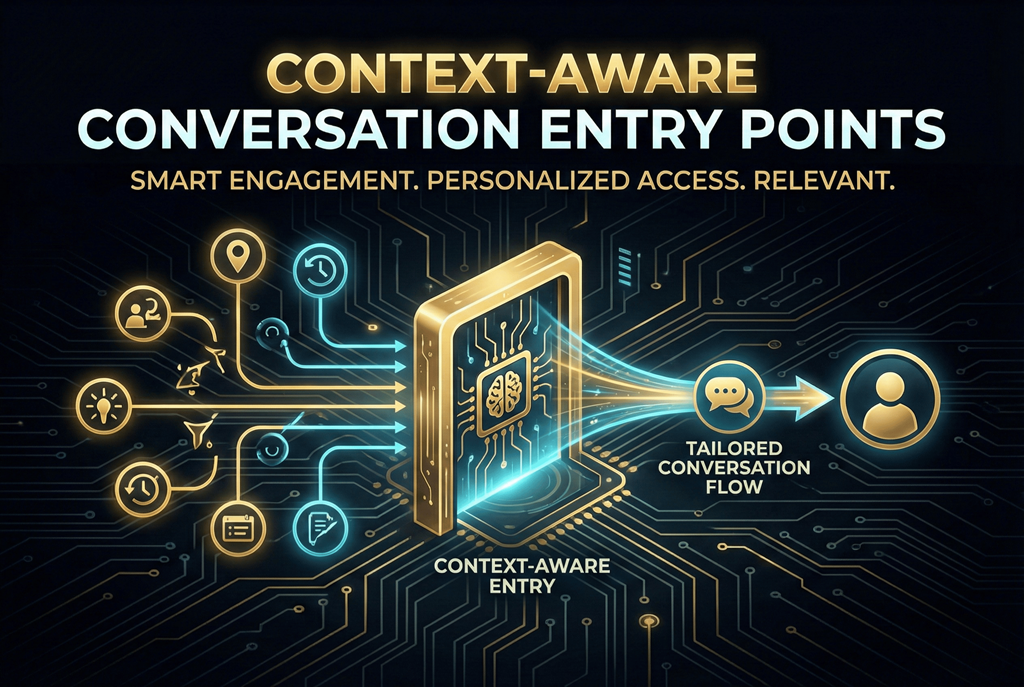
Context-Aware Conversation Entry Points
Once engagement priming has established visibility and familiarity, the transition into direct messaging becomes the most sensitive point in the entire Instagram outreach funnel. This is where most automation systems either convert momentum into dialogue—or collapse into detectable cold outreach.
A context-aware entry point does not begin with an objective. It begins with relevance.
Traditional outreach models focus on crafting persuasive opening lines. In 2026, persuasion in the first message is often counterproductive. Instagram’s conversational trust models evaluate early-stage interaction quality carefully. Low reply depth combined with repeated script patterns contributes to Instagram DM limits, reduced inbox visibility, and message filtering.
Context-aware conversation entry points solve this by aligning the first DM with observable interaction history.
If a user engaged with a specific story, the message can reference that moment naturally. If a shared interest is visible in their profile, the conversation can anchor there. The objective is subtle continuity. The DM should feel like the next logical step in an ongoing interaction, not the beginning of a sales sequence.
This alignment dramatically changes user psychology. Recipients are far more likely to respond when messaging acknowledges context rather than ignoring it. Recognition lowers resistance. Familiarity increases openness. Conversation begins with relevance instead of interruption.
From an algorithmic standpoint, this matters equally.
Instagram evaluates messaging behavior in relation to recent engagement signals. When a DM appears shortly after contextual interaction, the behavioral narrative remains coherent. When messaging appears detached from visible engagement, clustering models assign higher risk weight.
In scalable Instagram DM automation systems, context-awareness must be structured rather than improvised. AI chatters or operators need access to recent interaction data. Messaging logic must incorporate engagement history as an input variable. This transforms automation from static template deployment into adaptive conversational architecture.
Another key dimension of context-aware entry is restraint. Opening messages should remain lightweight and open-ended. They should invite participation rather than impose direction. Long explanations, early value propositions, or overt calls to action compress the relational timeline and increase friction.
Short, natural, situational messages generate higher conversation depth. Higher conversation depth generates stronger trust signals. Stronger trust signals improve deliverability and reduce restriction probability over time.
Context-aware entry points also reduce cross-account linguistic correlation risk. When each message adapts to unique engagement history, structural overlap decreases significantly. Instead of repeating identical openers across dozens of accounts, conversations diversify organically.
Importantly, context-aware messaging does not eliminate structure. It operates within defined behavioral boundaries. Tone remains aligned with brand voice. Escalation rules remain controlled. However, expression adapts dynamically to context.
This balance between structure and flexibility is what allows safe Instagram outreach funnels to scale.
In 2026, the first DM is no longer a pitch. It is a behavioral bridge.
Agencies that master context-aware conversation entry points convert engagement into dialogue seamlessly. Those that rely on static scripts compress stages prematurely and expose automation clusters.
When conversation begins as continuation rather than interruption, outreach transforms from risky activity into sustainable growth infrastructure.
Gradual Escalation Based on Engagement Depth
In 2026, escalation is no longer a timing decision. It is a depth decision.
One of the primary reasons agencies encounter Instagram DM limits and outreach restrictions is premature intent exposure. When multiple accounts introduce offers, links, or explicit calls to action at similar message counts, algorithmic clustering models identify a progression pattern. Even if individual conversations feel natural, collective uniformity creates detectable structure.
Gradual escalation based on engagement depth eliminates this vulnerability.
Instead of advancing conversations according to predefined step sequences, safe Instagram outreach funnels measure progression through interaction signals. How many reciprocal exchanges have occurred. Whether the recipient has initiated a message independently. Whether message length and emotional energy are increasing. Whether the conversation has shifted from reactive to participatory.
Escalation becomes conditional rather than scheduled.
This mirrors organic human behavior. In real conversations, intent emerges from momentum. It is not introduced after a fixed number of replies. Some interactions accelerate quickly because interest is obvious. Others remain exploratory for extended periods. Some never escalate at all.
When automation compresses these natural variations into standardized funnels, pattern density increases across accounts. Uniform escalation timing becomes statistically visible in multi-account Instagram automation systems.
Depth-based escalation distributes progression unpredictably.
Some conversations may introduce intent after three exchanges. Others may require ten. Others may never move beyond social dialogue. This diversity reduces cross-account correlation and aligns with Instagram’s behavioral realism models.
From a platform perspective, conversation depth is a trust indicator. Instagram evaluates sustained back-and-forth exchanges positively. When escalation occurs only after meaningful interaction, messaging appears relational rather than transactional. Deliverability stabilizes. Restriction sensitivity decreases gradually.
From a performance perspective, depth-based escalation improves conversion quality. Users who feel engaged and understood are more receptive to proposals. Intent introduced after conversational investment encounters less resistance.
Gradual escalation also provides structural flexibility during algorithm updates. If detection sensitivity around outbound links or promotional phrasing increases, agencies can extend conversational depth before introducing offers. This maintains funnel integrity without triggering enforcement spikes.
Importantly, depth-based escalation requires monitoring conversational metrics at scale. Agencies must track reply frequency, response timing variance, engagement reciprocity, and dialogue continuity. These signals inform when progression is justified rather than imposed.
This transforms escalation from a script-driven mechanic into a behavioral threshold system.
Another critical advantage is reduction of synchronized pattern shifts. When escalation is determined by engagement depth rather than identical sequences, accounts diverge naturally. Even if centralized intelligence adjusts overall pacing guidelines, distributed depth signals ensure progression timing remains individualized.
In scalable Instagram outreach automation architecture, gradual escalation based on engagement depth acts as both safety mechanism and performance multiplier.
It reduces uniformity. It strengthens trust. It aligns with human interaction models. It distributes risk across conversations rather than concentrating it at predictable intervals.
Ultimately, safe Instagram outreach in 2026 is not about moving faster. It is about moving when the interaction justifies it.
Agencies that design escalation around engagement depth build outreach systems that convert more efficiently and survive algorithm refinement more consistently.
Designing safe Instagram outreach funnels for agencies is no longer optional. It is foundational for long-term scalability.
Cold messaging without engagement groundwork triggers resistance. Scripted outreach creates linguistic fingerprints. Uniform escalation exposes automation clusters. Algorithm updates amplify these weaknesses.
Agencies that scale sustainably build outreach systems aligned with behavioral realism. They distribute intent across stages. They diversify activity types. They escalate based on interaction depth, not predefined steps.
In 2026, Instagram automation still works. But only when it mirrors how real relationships evolve on the platform.
Safe outreach funnels do not reduce growth velocity. They stabilize it.
In a landscape shaped by algorithm refinement and correlation analysis, structured progression outperforms aggressive tactics. Agencies that design for continuity rather than compression unlock scalable Instagram growth without sacrificing account integrity.