
Beginner to Advanced: A Complete Onimator Automation Roadmap
Automation is not a single setup—it’s a journey.
Many automation problems don’t come from misuse, but from misstiming . Users either rush into advanced strategies too early or fail to evolve their setup as their account grows. Onimator is designed to support automation at every stage, but long-term success depends on following a structured progression.
This roadmap breaks automation into clear stages, showing how each phase builds naturally on the last—so automation grows with your account, not against it.
Stage 1: Building a Safe Automation Foundation
Every successful automation strategy begins with safety—not performance.
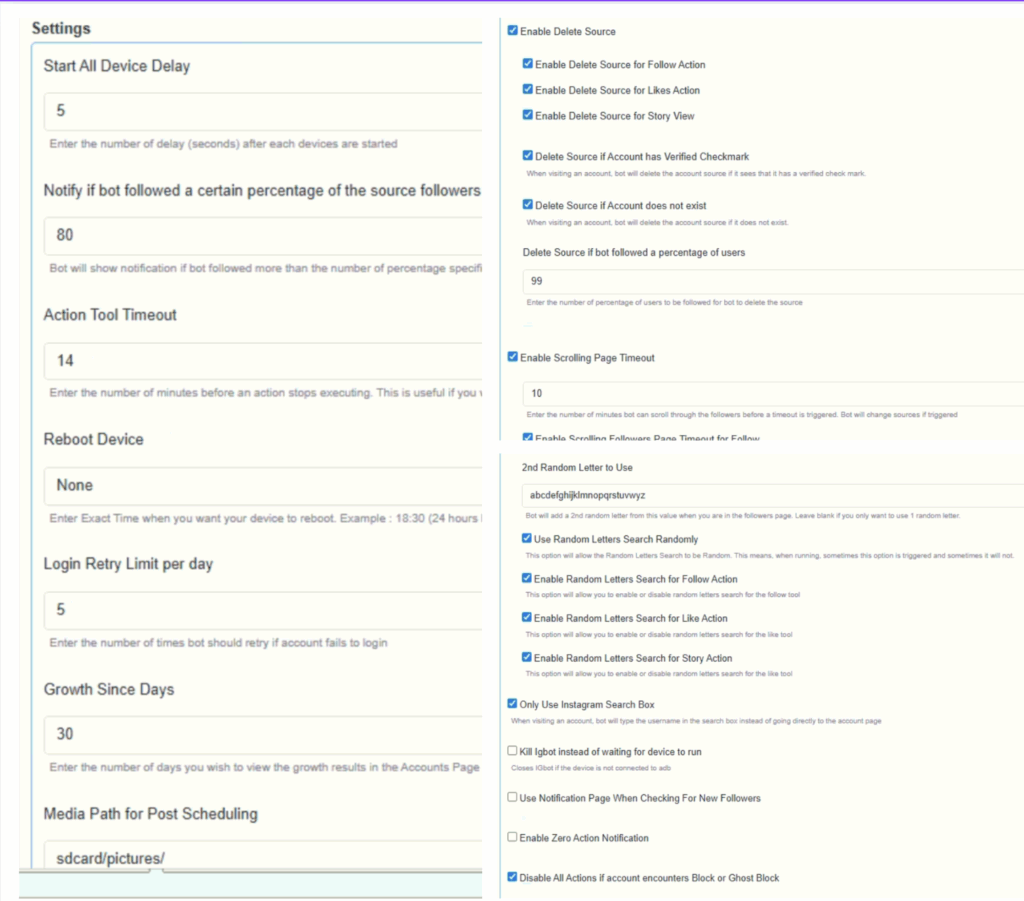
At the beginner stage, the primary goal is to establish predictable, human-like behavior . This is where Global Settings play a critical role. Conservative limits, realistic delays, and clearly defined active hours help your account settle into a stable rhythm.
This stage often feels slow, and that’s intentional. Platforms are highly sensitive to sudden behavioral changes, especially on newer or recently inactive accounts. By starting conservatively, automation blends into normal activity patterns rather than standing out.
Many long-term automation issues can be traced back to rushing this phase. Treat this stage as an investment: the more stable your foundation, the more confidently you can scale later.
Stage 2: Creating Simple, Reliable Workflows
Once safety boundaries are in place, workflows become the next focus.
At this stage, workflows should be purpose-driven and uncomplicated . Each workflow should handle a specific task and do it consistently. Simplicity makes automation easier to monitor, easier to adjust, and safer to maintain.
Overengineering workflows early often leads to confusion later. When too many actions are stacked together, it becomes difficult to understand what’s working and what isn’t. Simple workflows provide clean behavior patterns and clearer performance signals.
Consistency is the goal here. When workflows run the same way day after day, automation starts to feel natural—both to platforms and to you.
Stage 3: Introducing Job Orders for Structure
As automation expands, structure becomes essential.
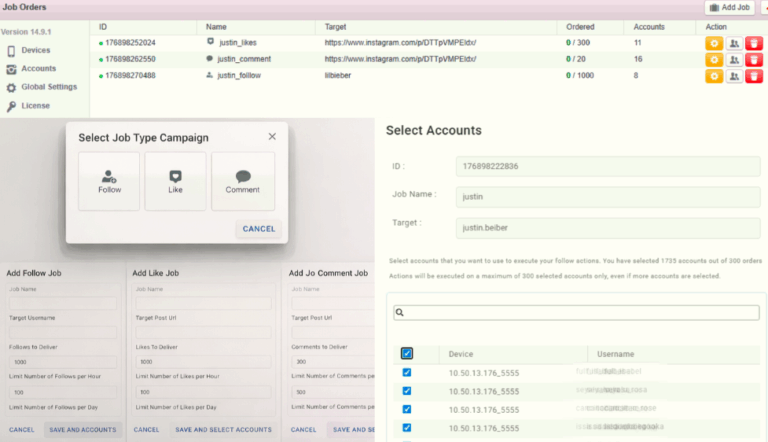
Job Orders help organize automation into intentional, trackable tasks . Instead of running everything continuously, Job Orders allow you to define what should run, for how long, and under what conditions.
This stage is where automation shifts from “always on” to strategically executed . Job Orders help prevent overlapping actions and make it easier to pause, adjust, or stop specific tasks without affecting the entire system.
By separating core workflows from Job Orders, you gain clarity. Automation becomes more manageable, predictable, and scalable.

Stage 4: Scaling Gradually and Observing Behavior
Scaling automation is where patience matters most.
At this stage, increases should be small, intentional, and isolated . Limits are adjusted one at a time. New Job Orders are introduced gradually. After each change, automation is observed—not rushed.
This slow approach allows platforms to adapt naturally to increased activity while giving you clear insight into how automation responds. Sudden jumps often create instability, while gradual growth builds confidence.
If scaling feels boring, it’s probably being done correctly. Sustainable growth rarely feels dramatic.
Stage 5: Refinement and Optimization
Once automation is stable and scaled, optimization becomes the priority.
This stage focuses less on how much automation runs and more on how it runs. Timing, pacing, and execution windows are refined to create smoother, more realistic activity patterns.
Small adjustments—like spreading actions more evenly or fine-tuning delays—can significantly improve long-term performance. Optimization at this level is subtle, but powerful.
Rather than adding new workflows, this stage is about improving the quality of what already exists.
Stage 6: Strategic Experimentation
Advanced automation users still experiment—but carefully.
Instead of modifying stable systems, experiments are run through isolated Job Orders . This allows new ideas to be tested without putting long-term automation at risk.
Strategic experimentation helps automation evolve intelligently. Successful tests can be repeated or expanded, while unsuccessful ones can be stopped without consequence.
This stage keeps automation adaptable without sacrificing stability.
Stage 7: Long-Term Maintenance and Review
At the most advanced level, automation becomes a background system.
Rather than constant adjustments, automation requires periodic review . Global Settings are checked, Job Orders are reviewed, and workflows are monitored for consistency.
Maintenance prevents small inefficiencies from accumulating over time. It ensures automation stays aligned with current goals while preserving the behavior patterns you’ve already established.
This stage is where automation truly becomes sustainable.
Final Thoughts
Automation success isn’t about shortcuts—it’s about progression.
By following a structured roadmap, Onimator users move from cautious beginners to confident, strategic automation operators. Each stage builds on the last, creating automation that is safe, adaptable, and long-lasting.
When automation grows with your account, it stops feeling risky—and starts feeling reliable.
Don't stop at reading.
Join the community or pick a plan and start automating today.
Get help, share wins, stay ahead.
Thousands of operators, direct support from the team, and a live feed of updates, tips and drops.
- Live support and troubleshooting from the team and power users
- Setup walkthroughs, targeting tips and workflow templates
- Early word on new bots, features and releases
Ready to put growth on autopilot?
Run your accounts, clients or traffic funnel while Onimator does the work. Start scaling today.
- Unlimited accounts
- All available tasks
- Integrated AI Chatter
- Up to 7 devices