
How to Scale Instagram, TikTok, and LinkedIn Without Cross-Platform Correlation

As agencies and brands expand beyond a single channel, growth architecture becomes exponentially more complex. Scaling on one platform requires understanding its behavioral logic. Scaling on three simultaneously—especially Instagram, TikTok, and LinkedIn—introduces a new layer of risk: cross-platform behavioral correlation.
Many operators assume that because each platform runs on a separate algorithm, activity remains isolated. In reality, synchronized patterns, structural repetition, and mirrored escalation logic across channels can create measurable similarity. While platforms do not openly disclose shared detection systems, behavioral compression across ecosystems increases overall suppression probability and reduces long-term stability.
The challenge is not simply to automate across multiple channels.
It is to scale without replicating the same behavioral blueprint everywhere.
Understanding Cross-Platform Correlation Risk
When brands begin scaling simultaneously on Instagram, TikTok, and LinkedIn, the focus typically remains on content adaptation. Visuals are reformatted, captions are rewritten, tone is adjusted to match audience expectations. On the surface, everything appears platform-specific. However, beneath that surface layer, many automation systems operate on a shared behavioral backbone. This is where cross-platform correlation risk quietly emerges.
Cross-platform behavioral correlation does not require identical posts or duplicated messaging. It forms when the structural logic behind activity remains aligned across ecosystems. If outreach escalation happens at similar interaction depth on both Instagram and LinkedIn, if posting cadence follows the same weekly acceleration pattern on TikTok and Instagram, or if engagement bursts occur within overlapping operational windows across all three platforms, structural similarity accumulates.
Each platform evaluates accounts independently, but behavioral compression within each ecosystem increases when patterns mirror each other.
For example, if a campaign launch triggers simultaneous scaling across Instagram DMs, TikTok publishing frequency, and LinkedIn connection outreach, the result is synchronized behavioral expansion. Even though the content formats differ, the scaling velocity curve becomes aligned. This alignment increases pattern density inside each individual platform because activity acceleration follows a consistent cross-channel trajectory.
The risk is magnified in centralized automation environments.
Agencies often deploy a unified growth dashboard, one timing logic engine, and shared optimization triggers. When performance improves on one platform, structural changes are rolled out across all channels at once. While operationally efficient, this creates synchronized adaptation waves that reinforce cross-platform similarity signals.
Another overlooked factor is escalation architecture.
If lead qualification, offer introduction timing, and follow-up intervals follow identical logic on Instagram and LinkedIn, structural rhythm begins to mirror across ecosystems. TikTok may not involve direct outreach in the same way, but if comment automation or profile engagement follows similar cadence patterns, alignment density increases.
Over time, mirrored rhythm creates predictability.
Predictability reduces organic dispersion.
Reduced dispersion increases detectability within each platform’s behavioral models.
It is important to clarify that platforms do not need to share data directly for cross-platform correlation to matter. When automation architecture is replicated across ecosystems, each platform independently observes similar structural signals. The cumulative effect increases suppression probability, reduces visibility amplification, or triggers subtle reach contraction.
Cross-platform risk is therefore architectural, not content-based.
Changing captions or reformatting videos does not reduce structural similarity if escalation pacing, scaling velocity, and timing windows remain synchronized. True risk mitigation requires separating behavioral frameworks at the foundational level.
Safe multi-platform automation strategy begins by recognizing that growth architecture must diverge across ecosystems. Each platform should have its own timing elasticity, escalation logic, and scaling trajectory. Optimization cycles should be staggered rather than mirrored. Infrastructure behavior should be segmented rather than centralized without dispersion.
Scaling across platforms amplifies opportunity.
But when structural rhythm becomes identical, amplification turns into alignment.
And alignment, at scale, becomes measurable.
Platform-Specific Behavioral Logic
Scaling safely across ecosystems requires more than adapting content formats; it demands designing distinct platform-specific behavioral logic for each environment. Instagram, TikTok, and LinkedIn operate on fundamentally different engagement models, and applying a unified automation blueprint across them increases structural similarity and long-term instability.
On Instagram, visibility is heavily influenced by engagement depth, retention signals, DM interaction quality, and relationship-based trust modeling. The platform rewards consistent behavioral rhythm, meaningful conversation flow, and diversified engagement patterns. Escalation pacing in DMs, story interaction timing, and feed posting cadence all contribute to overall Instagram algorithm trust signals. Systems that compress timing or replicate identical outreach logic across accounts increase detection probability over time.
On TikTok, the algorithm prioritizes velocity-based amplification. Early watch time, completion rate, and engagement momentum within the first distribution window determine how broadly content spreads. Unlike Instagram, TikTok relies less on relational DM ecosystems and more on performance bursts. Therefore, TikTok automation strategy must focus on content iteration rhythm, distributed publishing cycles, and adaptive experimentation rather than direct outreach pacing. Applying Instagram-style escalation frameworks to TikTok activity misunderstands how visibility is earned on the platform.
On LinkedIn, behavioral evaluation centers around professional credibility, connection acceptance rates, and conversational authenticity. The platform’s detection systems are particularly sensitive to repetitive outreach structures, compressed connection velocity, and low reply depth. Effective LinkedIn automation architecture requires gradual scaling, adaptive invitation pacing, and engagement-based escalation rather than volume-based messaging logic. Timing elasticity and relational context carry greater weight than rapid amplification.
When agencies deploy identical scaling models across these ecosystems, structural alignment forms despite surface-level content differences. For example, if posting acceleration curves increase simultaneously on Instagram and TikTok while LinkedIn outreach volume scales in parallel, the behavioral trajectory becomes synchronized. Even if the content differs, the underlying rhythm mirrors itself.
Designing true multi-platform growth architecture requires separating behavioral frameworks at the foundational level. Instagram may operate under a retention-and-relationship model. TikTok may follow a velocity-and-iteration model. LinkedIn may prioritize trust-and-escalation modeling. Each system should evolve independently, with its own pacing thresholds, scaling timelines, and optimization cycles.
Optimization cycles must also remain decentralized. If a performance improvement discovered on Instagram is immediately applied to TikTok and LinkedIn workflows, synchronized adaptation increases cross-platform similarity density. Staggered experimentation reduces mirrored behavior and preserves dispersion.
Infrastructure logic should reinforce this separation. Operational windows, scaling intensity, and engagement distribution should vary between ecosystems to prevent temporal alignment. True scalability emerges when each platform feels behaviorally native rather than structurally replicated.
The goal of platform-specific behavioral logic is not fragmentation. Strategic positioning, brand voice, and value proposition can remain consistent. What must diverge is execution rhythm, escalation architecture, and timing distribution.
In advanced cross-platform automation systems, safety and sustainability depend on structural independence. Content may adapt at the surface level, but growth architecture must diverge at the structural level. When each ecosystem operates under its own behavioral logic, correlation risk decreases and long-term visibility becomes more stable.
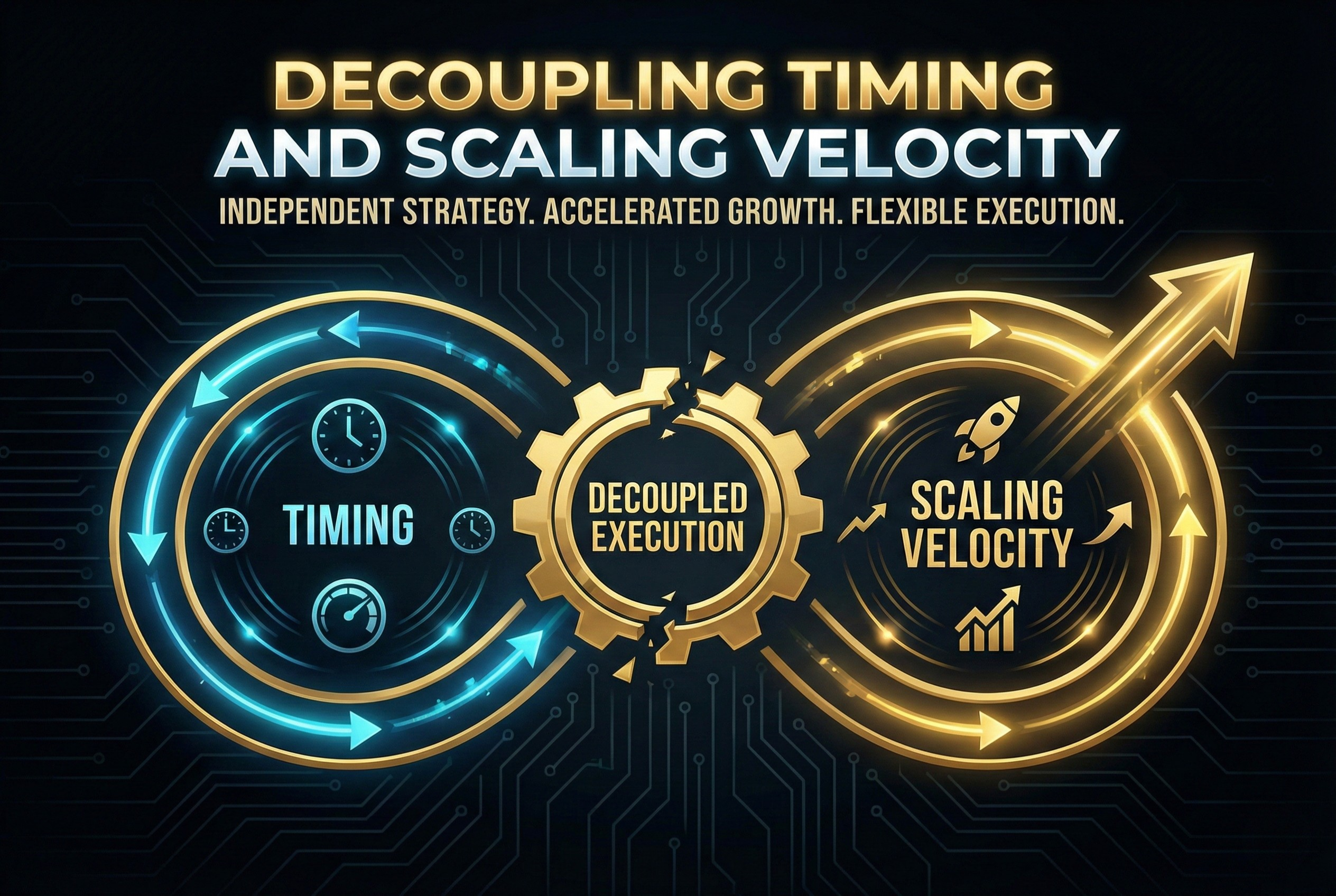
Decoupling Timing and Scaling Velocity
One of the most underestimated drivers of cross-platform behavioral correlation is synchronized growth acceleration. When brands expand activity on Instagram, TikTok, and LinkedIn at the same time, using similar pacing logic and identical scaling curves, structural alignment forms even if the content itself is platform-specific. The issue is not activity volume in isolation, but mirrored velocity.
Scaling velocity refers to how quickly output increases over time. If posting frequency doubles on Instagram this week, TikTok publishing cadence accelerates simultaneously, and LinkedIn outreach volume rises in parallel, the behavioral trajectory becomes synchronized. Each platform independently observes a sharp activity expansion that follows the same acceleration pattern. While the ecosystems do not need to share data, the mirrored rhythm increases pattern density within each environment.
Decoupling velocity begins with staggered scaling cycles.
Instead of launching multi-platform expansion simultaneously, growth phases should be distributed across different time windows. Instagram optimization may run during one cycle, while TikTok experimentation remains stable. LinkedIn outreach expansion can occur later, once other platforms have stabilized. This staggered architecture reduces synchronized adaptation waves and lowers multi-platform automation risk.
Daily timing must also be diversified.
Posting windows, outreach intervals, and engagement blocks should not overlap perfectly across ecosystems. If content consistently publishes within identical time bands on Instagram and TikTok while LinkedIn messaging activates in the same operational window, temporal compression signals strengthen. Introducing distributed activity windows preserves timing elasticity and reduces rhythm predictability.
Optimization rollouts require similar separation.
When a new high-performing engagement structure is identified on one platform, immediately replicating it across all channels creates structural convergence. Decoupled systems test and integrate improvements gradually, allowing each ecosystem to evolve independently. This prevents synchronized behavioral shifts that amplify correlation probability.
Velocity management must also account for performance feedback.
If Instagram engagement increases, scaling there may be justified. However, TikTok or LinkedIn should not automatically mirror that expansion unless performance data independently supports it. Adaptive, platform-specific pacing prevents mirrored growth curves.
Infrastructure scheduling should reinforce decoupling.
Separate operational dashboards, distinct scaling calendars, and independent experimentation timelines reduce centralized rhythm alignment. When growth decisions are made per ecosystem rather than globally, structural independence increases.
The objective of decoupling timing and scaling velocity is not slower growth.
It is differentiated growth.
Sustainable cross-platform automation strategy ensures that each ecosystem expands according to its own engagement signals and algorithmic logic rather than following a centralized acceleration template. When scaling trajectories diverge, correlation density decreases and long-term stability improves.
In advanced multi-platform environments, mirrored velocity creates visibility risk. Distributed acceleration preserves structural authenticity and reduces detectability over time.
Infrastructure Segmentation and System Independence
When discussing cross-platform automation risk, most operators focus exclusively on content strategy and behavioral pacing. Far fewer examine the structural layer that underpins activity across ecosystems. Yet in scalable environments, infrastructure segmentation is often the decisive factor between sustainable growth and accumulated correlation risk.
Infrastructure is not only about servers or devices.
It includes session behavior, login patterns, operational dashboards, scaling calendars, and deployment logic. When Instagram, TikTok, and LinkedIn automation systems are managed through a fully centralized execution environment without dispersion, structural alignment becomes easier to detect within each platform’s internal models.
Even if platforms do not directly share detection data, mirrored infrastructure behavior increases pattern density independently inside each ecosystem.
For example, if all platforms are scaled through the same operational time blocks, using synchronized automation triggers and identical rollout cycles, behavioral compression forms at the system level. When optimization updates are deployed simultaneously across Instagram DMs, TikTok publishing cadence, and LinkedIn outreach workflows, synchronized structural shifts occur. These shifts create measurable adaptation waves within each platform’s behavioral modeling.
System independence reduces this exposure.
Each platform should operate under its own execution timeline, scaling cadence, and experimentation framework. Instagram engagement adjustments should not automatically propagate to TikTok publishing logic. LinkedIn outreach refinements should be tested independently before broader adaptation. Staggered implementation prevents synchronized behavioral convergence.
Session stability must also remain platform-specific.
Login behavior, operational windows, and activity clustering should vary across ecosystems to reduce temporal alignment. If all three platforms exhibit parallel session activation patterns, structural rhythm becomes mirrored even if user-facing activity differs.
Decentralized monitoring reinforces segmentation.
Instead of one unified automation dashboard controlling all ecosystems in real time, segmented performance clusters allow each platform to evolve according to its own engagement signals. This architectural separation reduces cross-platform pattern amplification and preserves behavioral authenticity.
It is important to emphasize that segmentation does not mean fragmentation.
Brand positioning, messaging pillars, and strategic objectives can remain centralized. What must remain independent is execution logic. Timing distribution, scaling velocity, and structural updates should diverge intentionally across systems.
The more tightly coupled automation infrastructure becomes, the easier it is for mirrored patterns to emerge. The more segmented the operational architecture, the greater the dispersion in behavioral signals.
In advanced multi-platform growth architecture, safety is not only a matter of content differentiation. It is a matter of structural independence. When infrastructure layers are segmented and optimization cycles are decoupled, correlation density decreases and long-term stability increases.
Growth across ecosystems can scale in parallel.
But the systems powering that growth should never move in lockstep.
Scaling across Instagram, TikTok, and LinkedIn offers exponential reach potential, but it also introduces structural complexity. The greatest risk is not automation itself. It is mirrored automation.
Cross-platform behavioral correlation emerges when identical pacing, escalation logic, and scaling velocity are replicated across ecosystems. Even when content formats differ, structural similarity compounds.
Safe growth depends on platform-specific behavioral frameworks, staggered scaling cycles, timing dispersion, and infrastructure segmentation. Each channel should evolve under its own optimization timeline while remaining aligned with broader brand strategy.
In advanced multi-platform automation systems, sustainability is achieved through architectural independence rather than centralized replication.
Growth can scale across ecosystems.
But structure must not mirror itself.
Don't stop at reading.
Join the community or pick a plan and start automating today.
Get help, share wins, stay ahead.
Thousands of operators, direct support from the team, and a live feed of updates, tips and drops.
- Live support and troubleshooting from the team and power users
- Setup walkthroughs, targeting tips and workflow templates
- Early word on new bots, features and releases
Ready to put growth on autopilot?
Run your accounts, clients or traffic funnel while Onimator does the work. Start scaling today.
- Unlimited accounts
- All available tasks
- Integrated AI Chatter
- Up to 7 devices