
The Early Engagement Bonus: What Post Monitors Actually Buy You

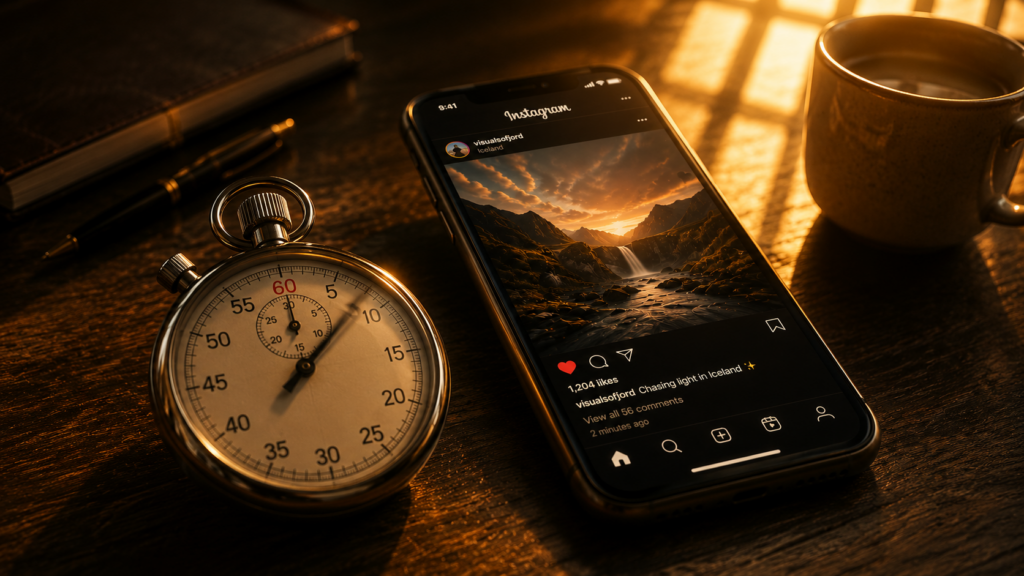
Instagram distributes content the way a first impression is made in an interview: quickly, unevenly, and with most of the outcome decided in a window shorter than most creators realize is happening. Two identical posts published by the same account on the same day can produce completely different reach numbers based on what happens in the first five to thirty minutes of the post’s life. The account, the caption, the hashtag set, and the image itself are all the same. What differs is the velocity of engagement that arrived while the algorithm was making its first pass at deciding whether the post deserved further distribution.
This window is what operators call the early-engagement bonus. It is not a marketing term. It is a specific bias in how Instagram’s ranking system evaluates new content, and it is the single most important variable creators and agencies can influence between the moment a post publishes and the moment its final reach ceiling is set. Post monitors are the operational tool that captures this bonus reliably, and the difference between accounts that use them well and accounts that ignore them is often the difference between accounts that grow and accounts that stagnate.
The engagement itself is not what matters. The timing of it is.
What the Algorithm Actually Watches in the First 30 Minutes
Instagram’s ranking system is not a single-pass evaluation. It is a series of decisions the platform makes as new content moves through its distribution funnel, and each decision is informed by different signals. In the first few minutes after publication, the system tests the post against a small audience — usually the operator’s most active recent viewers plus a small sample of accounts the algorithm thinks might respond. The response from that initial audience determines whether the post moves to broader distribution or stays capped at the small test group.
Several specific signals drive this initial decision. Engagement velocity is the most heavily weighted, as likes and comments arriving at a fast rate signal that the content is producing response, and posts with high velocity in the first few minutes get advanced to wider distribution faster. Engagement type matters next. Saves signal intent to return, which the algorithm reads as high value. Comments signal deeper engagement than likes. Shares to stories signal willingness to endorse the content publicly. Each interaction type contributes to the decision, but not equally.
The source of the engagement also matters. Interactions from accounts the algorithm evaluates as high-trust-score profiles (real accounts with active engagement history, established follower graphs, clean behavioral patterns) count more than interactions from low-quality accounts. Engagement from accounts within the post’s target audience geography and interest cluster counts more than engagement from unrelated accounts. And engagement from accounts the current account has meaningful history with, whether that means mutual follows, prior conversations, or story-view relationships, counts more than engagement from cold accounts.
Everything above gets evaluated in the first thirty minutes and largely locks in the post’s distribution ceiling before most operators even open Instagram to check on it.
Why 5 Minutes Beats 5 Hours
The time-decay curve on early engagement is steep enough that operators who understand it treat the first five minutes as a completely different resource than any subsequent engagement they might get. A hundred likes arriving in the first five minutes influence the algorithm’s decision materially. The same hundred likes arriving six hours later have essentially no effect on the distribution ceiling that has already been set. The engagement went into the same post, appeared on the same profile, and produced the same visible like count, but only the early hundred moved the needle on distribution.
This asymmetry has several implications operators eventually confront. Peak-hour posting matters less than most creators are told because peak hours only help if there are engaged accounts ready to interact immediately when the post drops. Posting when your audience is present but distracted produces worse outcomes than posting when a smaller but coordinated group is ready to respond within minutes. Content quality matters less in isolation than most creators want to believe because a top-quality post that receives slow initial engagement gets capped by the algorithm before its quality can compound into distribution. The reverse case is where a mediocre post that gets strong immediate engagement often outperforms a better post that arrived cold.
The compounding effect is what makes this brutal. A post that clears its first-pass evaluation gets pushed to the next tier of distribution, where it is tested against a larger audience. If the engagement rate holds at the larger tier, it moves to another tier, and another. Every tier compounds. A post that fails the first-pass evaluation never enters the compounding loop and stays capped at the small initial audience regardless of how much engagement it accumulates later.
The first five minutes is not a nice-to-have. It is what everything after depends on.
The Operational Problem: You Cannot Do This Manually
The manual version of capturing early engagement requires the operator to publish and then somehow ensure that a defined pool of accounts sees the post and interacts with it within the first five to thirty minutes. In practice, this fails for almost everyone who tries it.
The operator does not control when the target audience opens the app. Even the most loyal audience does not all open Instagram in the same five-minute window on demand. The operator does not control which friends and mutual connections happen to be scrolling at the moment of publication. The operator cannot coordinate with a group of collaborating accounts in real time without dedicating a substantial part of every posting session to that coordination. And the operator cannot solve any of the above at fleet scale, where they may be managing engagement across dozens of accounts publishing at different times.
Timing coincidences work occasionally. They do not scale. Every serious creator who has tried to hit the early-engagement window through manual coordination reaches the same conclusion. Some posts happen to catch the wave, most do not, and the ones that miss the wave underperform in ways the content itself cannot explain.
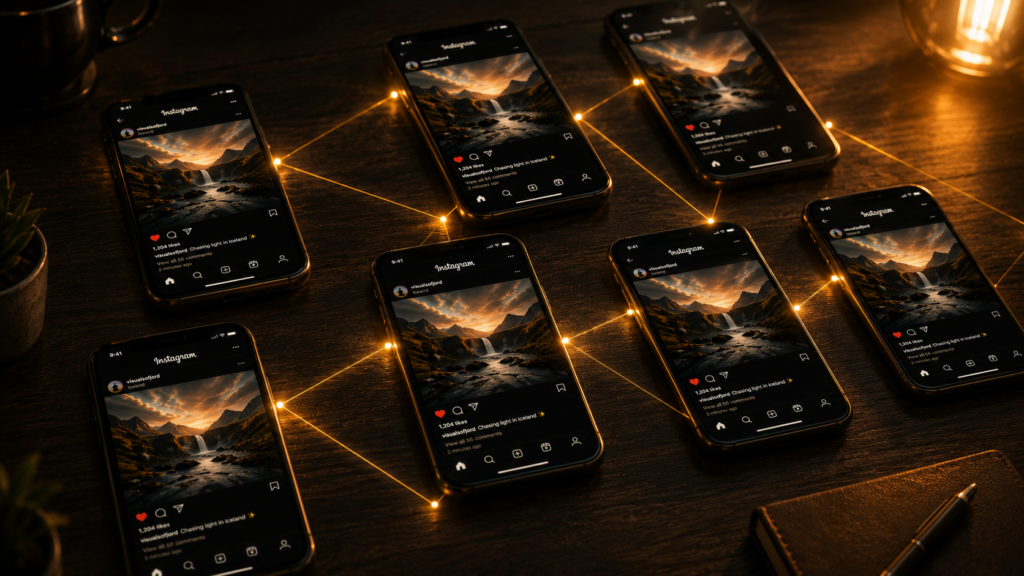
Post monitors solve the coordination problem by removing the operator from the timing decision entirely. The tool watches the target account, detects the moment a new post appears, and dispatches configured engagement across a defined pool of accounts within minutes. The operator publishes and stops thinking about early engagement. The tool handles it.
What a Well-Configured Post Monitor Does Differently
Naive post-monitor implementations dispatch identical engagement patterns to every post from the same account, at the same speed, from the same pool. This produces the early-engagement effect, but it also produces a signature detection systems catch quickly, and the accounts in the engagement pool eventually get restricted for coordinated behavior.
Production-grade post monitors handle several problems the naive versions do not. The polling interval is tuned to the target’s actual posting cadence. High-volume creator accounts warrant tighter polling; less active accounts get longer intervals to conserve API budget. The dispatch pattern staggers the engagement across a natural distribution window rather than firing everything simultaneously, so the post does not receive its first two hundred likes within thirty seconds in a way no organic distribution would produce.
The engagement pool rotates across posts so the same accounts are not reliably engaging the same target every time. A target that receives coordinated engagement from the identical set of twenty accounts on every single one of its posts is producing an obvious pattern. A target that receives coordinated engagement from a rotating subset of a larger pool looks materially more organic. Some post monitors extend rotation across time-of-day so specific accounts engage during their normal activity hours rather than firing whenever the target happens to post.
Well-configured monitors also handle the composition of engagement. Not every dispatched action should be a like. A healthy mix includes a small number of comments (drawn from spintax templates or AI-generated lines matched to the post content), a smaller number of saves, and the bulk as likes. The exact ratios depend on the target audience and platform sensitivity, but the mix should approximate what organic engagement patterns look like rather than producing a wall of identical likes.
The safety configuration also matters. Post monitors that dispatch engagement into accounts currently under rate-limiting restrictions or in cool-down cycles push those accounts further into trouble. Sophisticated implementations check per-account state before dispatch and skip accounts that should not be running engagement in the moment, retrying them on the next dispatched post.
Where Post Monitors Fit in the Broader Growth Stack
Self-boosting is the most common use case. Creators watching their own accounts through a post monitor produce consistent early engagement on every post without depending on the timing coincidences of audience presence or manual coordination. The account trains the algorithm over time. Every post gets rewarded with strong early velocity, and over months the account’s baseline distribution rises because the algorithm has learned that this account’s content reliably produces engagement.
Engagement pods use the same mechanism across multiple creator accounts. When any pod member publishes, the shared monitor triggers reciprocal engagement from every other pod member’s fleet. The pod produces coordinated boost without any individual member needing to manually reciprocate or remember to check when someone else has posted. Trust between pod members and coordination overhead both drop to near zero because the tool handles the coordination.
Agencies deliver engagement as a service to clients through post monitors. The client publishes on their schedule and the agency’s monitor picks up the post and dispatches the contracted engagement volume through Job Orders to the assigned account pool. Client-reporting integrations track every dispatched action so the agency can prove delivery. The client experience is completely hands-off. They publish, and engagement arrives.
The one thing post monitors do not do is fix content. A post that receives strong early engagement but produces no subsequent organic interaction still hits its distribution ceiling and stops. Post monitors capture the early-engagement bonus for content that would organically perform well if given a fair chance. They do not manufacture reach for content that fundamentally does not resonate with the target audience. The tool amplifies what is already working. It does not compensate for what is not.
The first five minutes is where the algorithm decides. Post monitors are how you make sure someone is there.
Don't stop at reading.
Join the community or pick a plan and start automating today.
Get help, share wins, stay ahead.
Thousands of operators, direct support from the team, and a live feed of updates, tips and drops.
- Live support and troubleshooting from the team and power users
- Setup walkthroughs, targeting tips and workflow templates
- Early word on new bots, features and releases
Ready to put growth on autopilot?
Run your accounts, clients or traffic funnel while Onimator does the work. Start scaling today.
- Unlimited accounts
- All available tasks
- Integrated AI Chatter
- Up to 7 devices