
Why 100% Right-Swiping Kills Your Tinder Account (Even Without a Ban)
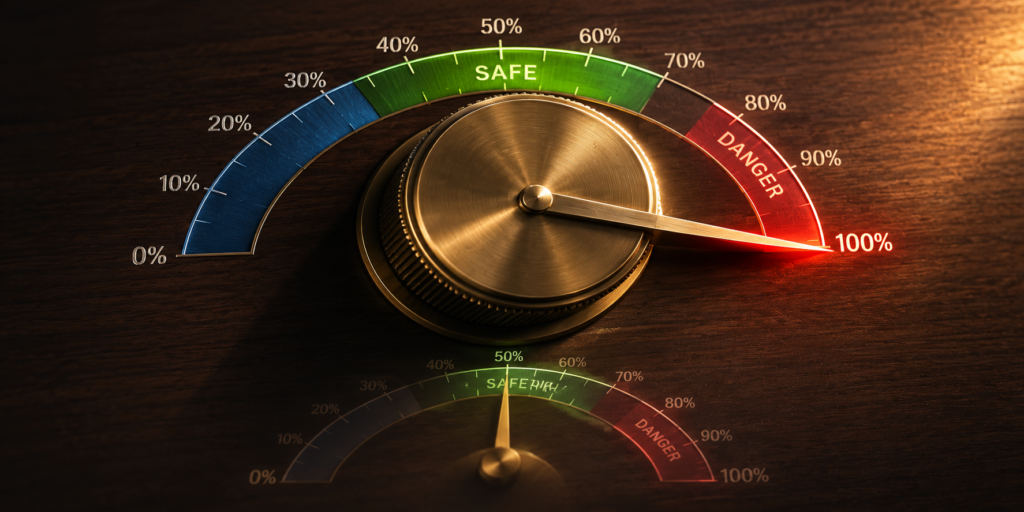
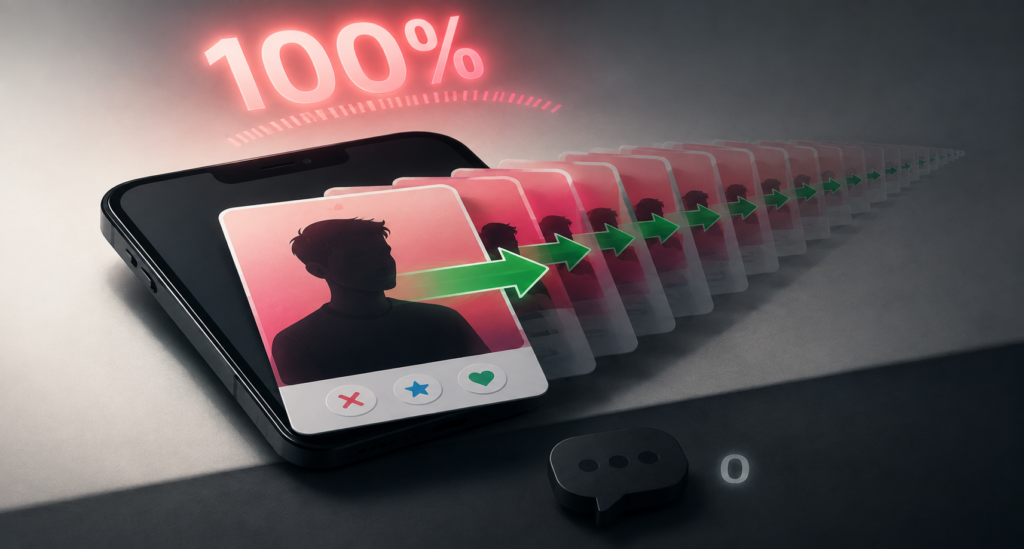
An operator sets up a Tinder Matching automation on a fresh account. The configuration looks efficient — max out the daily like limit, keep the pacing tight, and set Percent to Like at 100% so no swipe is wasted on profiles the bot decides to pass. The first week produces the expected result: match volume higher than anything the operator has achieved before, dozens of matches accumulating daily, downstream messaging automation working through the pipeline of new conversations.
Then week two arrives, and something quiet happens. Match volume drops. Not dramatically — the account is still producing matches — but noticeably below the first week’s numbers despite the automation running exactly the same configuration. Week three drops further. By week four, the account is producing a fraction of week one’s match volume while running identical settings, and the operator can’t find anything wrong. The account isn’t restricted. There’s no ban notification. The Matching tool is dispatching its configured swipes on schedule. But the matches aren’t coming.
The account isn’t broken. The account has just been quietly de-ranked by Tinder’s internal desirability system in response to the specific behavioral signature 100% right-swipe rate produces, and the de-ranking cascades across every future session regardless of what the operator does with tool configuration. There’s no ban to appeal, no popup to handle, no visible enforcement to respond to. The account is technically running normally and mechanically failing to produce results because of a signal that was set in motion during the first week and has been compounding invisibly ever since.
Selectivity is the single most consequential setting on any dating Matching tool. Not because it affects the current session’s output, but because it affects every future session’s output through a mechanism the operator can’t see happening.
What ELO Actually Measures
Tinder’s ELO Score is the internal desirability metric that determines two specific things: how frequently the account appears in other users’ stacks, and what quality of profiles get shown to the account in return. Both are inputs to match volume. High ELO means the account appears in more users’ stacks (more potential matches) and gets shown higher-quality profiles (better conversion on the swipes the operator makes). Low ELO means the reverse: fewer appearances in other users’ stacks, lower-quality profiles in the account’s own stack, and a cascading reduction in achievable match volume regardless of swipe configuration.
ELO isn’t a hidden random number the platform assigns arbitrarily. It gets calculated from the account’s specific behavioral patterns: how selectively the account swipes, how the accounts that see it respond (right-swipe rate on the account), how conversations progress after matches, and dozens of other signals that indicate whether the account produces the kind of experience Tinder wants to promote to more users.
Selectivity feeds directly into this calculation. Accounts that swipe discerningly signal to the platform that they have standards — and by implication, that their eventual matches will be intentional connections rather than the byproduct of indiscriminate liking. Accounts that swipe on everything signal the opposite: no standards, no intentionality, low-value engagement. The platform’s algorithmic response to the low-standards signal is to reduce how often the account gets shown to others, because promoting a low-standards account to more users produces worse experiences for the users seeing it.
Why 100% Right-Swipe Rate Is the Loudest Signal
The specific reason 100% Percent to Like produces the strongest automation signal isn’t that Tinder identifies “100% is unusual” through some threshold check. It’s that no real user actually swipes right on every profile they see. Real users have preferences, aesthetic filters, dealbreakers, and quiet biases that produce right-swipe rates varying wildly across users but that essentially never reach 100%. The pattern is a real property of how human attention interacts with a swipe interface, and its absence is a signal automation can’t fake by accident.
Tinder’s models are tuned to expect the specific distribution real user selectivity produces. Some users are very selective (10–20% right-swipe rate). Some are more open (60–70%). Most fall somewhere in the 30–60% range. A 100% right-swipe rate sits outside the distribution real users produce, and the platform’s response is straightforward: treat the account as either automated or as having zero selectivity, and adjust the account’s visibility accordingly.
The Selectivity Dial exposed as Percent to Like is the specific setting that determines whether the account produces a signature inside the real-user distribution or outside it. Configurations inside the 40–70% range produce signatures that read as ordinary user behavior. Configurations at 100% produce signatures that read as either automation or as low-quality behavior worth de-ranking. The gap between these outcomes is measured in ELO damage that compounds across weeks, and the specific range difference is invisible to operators looking only at surface metrics like initial match volume.
The Volume vs. Quality Math
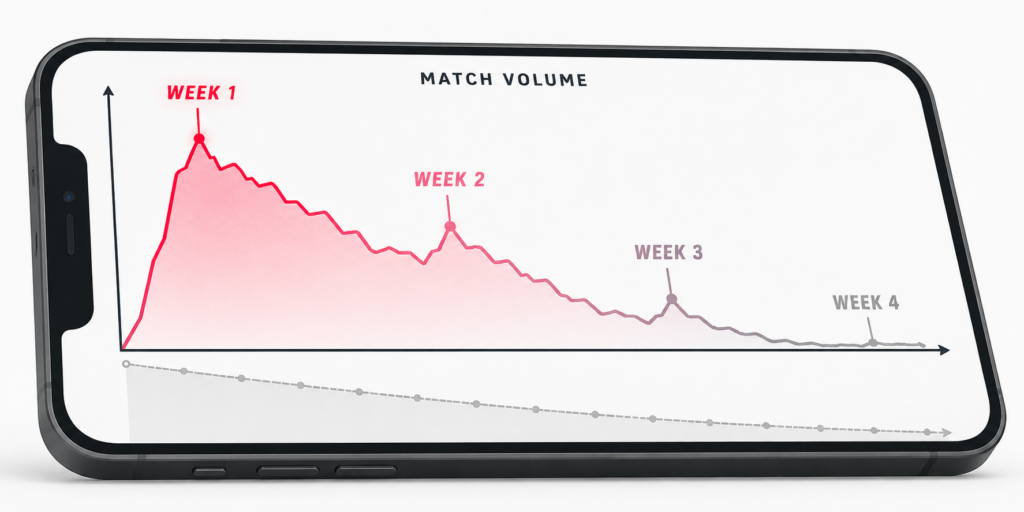
The intuitive math argument for 100% Percent to Like is that more likes should produce more matches — after all, matches require right-swipes on both sides, and the operator can only control their own account’s swipe rate. Maximizing right-swipe rate should maximize match production, and any lower rate should leave matches on the table.
The intuitive math is wrong because it doesn’t account for ELO’s effect on the denominator. The relevant equation isn’t “matches = right-swipes on your side × right-swipes on their side.” It’s roughly “matches = (right-swipes on your side) × (probability the other user right-swipes you) × (frequency you appear in other users’ stacks).”
Right-swipe rate on the operator’s side is one term. ELO drives the other two. When high right-swipe rate damages ELO, both frequency of appearance and probability of reciprocal right-swipe drop. The gains from doubling right-swipe rate get more than offset by the ELO-driven losses in the other two terms, and the aggregate match volume falls despite the visible right-swipe count going up.
Well-configured selectivity in the 40–70% range preserves ELO while producing sufficient right-swipe volume for match generation. The math works out to more matches per week than 100% Percent to Like produces after ELO damage compounds, and the pattern holds across months of operation because the ELO stays intact rather than eroding under continuous over-liking pressure.
What Real User Selectivity Looks Like
The specific reason 40–70% works isn’t arbitrary. It reflects the distribution of real user selectivity Tinder’s models expect. Configurations inside this range produce behavioral signatures that fit inside the real-user distribution, which produces ELO trajectories that either hold steady or improve over time.
New accounts benefit from the lower end of the range (40–50%) during warm-up because fresh accounts benefit from producing extra-conservative signatures while Tinder’s detection models evaluate the specific baseline behavioral pattern the account establishes. Extra selectivity in the first weeks produces the specific onboarding signature that matches how real new users typically behave — cautious at first, more relaxed as they get comfortable with the platform.
Warmed accounts can settle into higher-end configurations (60–70%) once the account has demonstrated it produces sustainable patterns. The specific transition from warm-up selectivity to steady-state selectivity happens gradually rather than as a hard step — the specific principle is that sudden shifts in behavioral pattern generate their own detection signatures, and gradual selectivity increases across days produce the specific evolution real users generate as their platform usage matures.
Bumble Runs the Same Trap With Tighter Budget
The same trap exists on Bumble but with materially higher operational cost because Bumble’s tight daily-like ceiling (roughly 25 right-swipes per day on free accounts) means every wasted like has proportionally more relative cost than on Tinder. Configuring Bumble Matching at 100% Percent to Like produces the same ELO-equivalent desirability damage that Tinder’s system produces, but the operator is also burning the tight daily budget on indiscriminate liking rather than on profiles the account should actually target.
The math on Bumble is even more unforgiving than on Tinder. Bumble’s daily-like ceiling caps the theoretical maximum match volume regardless of what the operator does, and burning that ceiling on 100% selectivity produces both the desirability damage and the operational waste of using the entire daily budget on low-value targets. Well-configured Bumble Matching sits at the lower end of the recommended range (40–60%) specifically because the ceiling makes every like proportionally more valuable, and wasting likes on indiscriminate right-swiping has proportionally more relative cost.
Recovery Doesn’t Work the Way Operators Expect
Operators who discover the trap and try to recover typically make the specific mistake of dropping Percent to Like from 100% to some more conservative value (say 50%) and expecting ELO to recover as the specific behavioral signature normalizes. It doesn’t work like that.
ELO damage from sustained over-liking behavior accumulates over weeks and takes materially longer to reverse than to accumulate. An account that damaged its ELO through two weeks of 100% selectivity typically needs months of well-configured selectivity to restore ELO to where it would have been if the operator had configured selectivity correctly from day one. Some ELO damage never fully recovers because the platform’s models treat established behavioral baselines as persistent signal rather than as easily-reversible flags.
The operational implication is that selectivity configuration errors on early-lifecycle accounts often produce the specific outcome where the operator burns the account. It’s not that the account gets banned; it’s that the account’s ELO gets damaged early enough that the account can never reach the match volume a properly-configured account would produce, and the operator eventually retires the account and starts fresh with a new one.
The Setting That Takes Seconds to Get Right
The mechanics of the trap are all invisible to operators focused on surface metrics. First-week match volume on 100% selectivity looks like a success. The ELO damage doesn’t produce a visible notification. The compounding effect happens across weeks rather than in a single event. By the time the aggregate match volume has visibly collapsed, the operator has been running the misconfiguration for long enough that meaningful recovery is impractical.
The setting that would have prevented all of it takes seconds to configure correctly. Set Percent to Like to 50 during warm-up. Increase to 60–65 after two weeks of clean operation. Never touch 100%. That’s the entire discipline required to keep ELO intact and produce sustainable match volume across months rather than initial spikes followed by compounding decline.
The visible metric that looks best in week one is the specific metric that guarantees week four’s collapse. The dial that takes seconds to configure correctly is the specific dial most operators discover through the hard version of learning what happens when they get it wrong. There’s no ban to appeal, no visible enforcement to respond to, just the quiet reality that the account is running normally and no longer producing the results it did when it started.
Don't stop at reading.
Join the community or pick a plan and start automating today.
Get help, share wins, stay ahead.
Thousands of operators, direct support from the team, and a live feed of updates, tips and drops.
- Live support and troubleshooting from the team and power users
- Setup walkthroughs, targeting tips and workflow templates
- Early word on new bots, features and releases
Ready to put growth on autopilot?
Run your accounts, clients or traffic funnel while Onimator does the work. Start scaling today.
- Unlimited accounts
- All available tasks
- Integrated AI Chatter
- Up to 7 devices