
What Is an SMM Panel, and Why Panel Engagement Gets Accounts Flagged
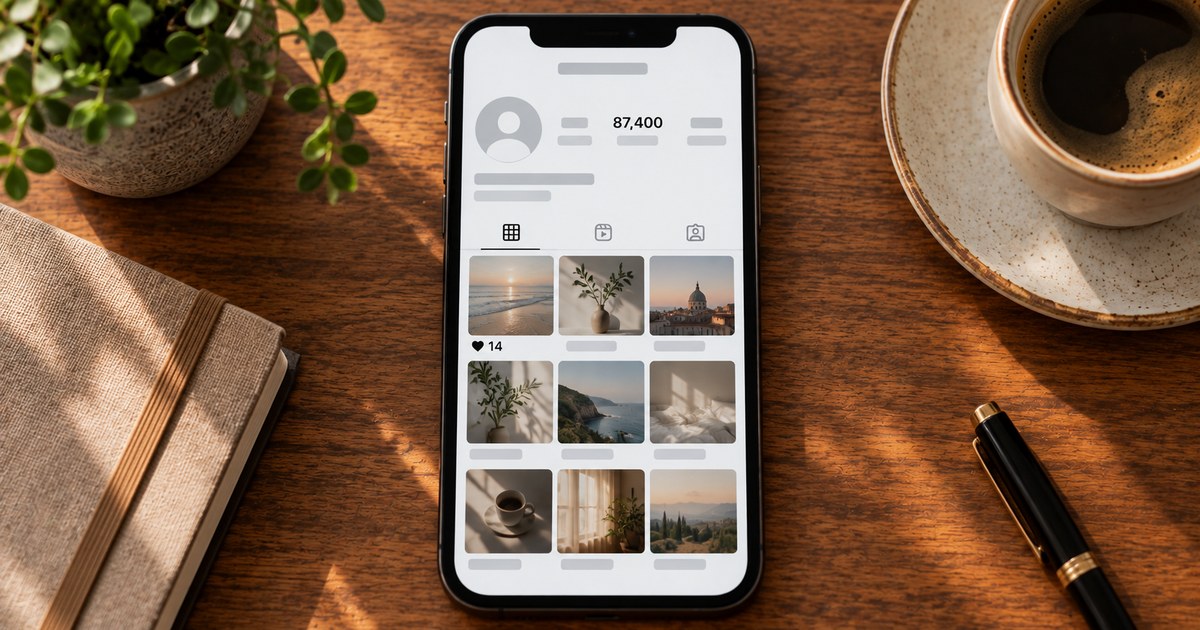
An SMM panel is a wholesale platform that sells social media engagement by the unit. You open a web interface, pick a service such as 1,000 Instagram followers or 500 likes, paste a link, and pay. Panels sell mainly to resellers and agencies rather than to end customers, which is why the prices look impossibly low.
The engagement arrives. That part usually works. The question worth asking, and the one this article answers, is what it arrives as, and what the platform does with an account once it has received a lot of it.
For the definition and supply-chain detail, see SMM Panel in the glossary. This article is about what panel engagement does to an account.
How does an SMM panel actually work?
It is a reseller storefront sitting on top of somebody else's delivery infrastructure. The panel itself usually does not create the engagement. It buys from providers upstream, marks it up, and exposes the catalogue through a web dashboard and an API.
A typical order flow:
- Choose a service from a list, priced per thousand units
- Paste the target link, a profile or a post
- Set the quantity and pay from a prepaid balance
- The order goes to a provider who fulfils it from their own supply
The panel's business is distribution, not delivery. That matters, because it means the person selling you followers usually cannot tell you where they came from.
Where does panel engagement come from?
From accounts that exist to produce engagement, not from people interested in your content. In practice that means one of three sources:
| Source | What it is | What it looks like |
|---|---|---|
| Bot accounts | Created in bulk, no real history | No posts, generic usernames, follows thousands |
| Farmed accounts | Real-looking accounts run at scale for resale | Some history, but engagement spread across unrelated niches |
| Incentivised users | Real people paid to follow or like | Real accounts, zero interest in your content |
None of those three is a person who wanted to see what you post. That is the whole problem, and it is a problem regardless of how convincing the accounts look.
What does the platform see when engagement is bought?
It sees a mismatch between who followed you and how they behave afterwards.
Platforms do not need to identify the panel or the provider. They measure what happens next, and bought engagement produces a pattern that organic engagement does not:
- A burst of follows from accounts with no topical relationship to yours, arriving far faster than your reach would explain
- Followers who never return. They do not view stories, do not linger on posts, do not come back tomorrow
- Engagement from accounts that also engage with unrelated niches, because the same supply serves many buyers at once
- Likes without reach. A post that collects likes from accounts that were never shown it
The last one is the clearest signal available. A post is distributed to some audience, and engagement should come from within it. Engagement arriving from outside that distribution is arithmetic, not inference.
Why does panel engagement cost you reach?
Because reach is allocated on engagement rate, and bought followers inflate the denominator while contributing nothing to the numerator.
Add 10,000 followers who will never see a post, and every future post is measured against an audience of 10,000 people who do not respond. The rate collapses. The platform distributes the next post to fewer people, which lowers the rate again.
This is the part that surprises people. The account is not necessarily penalised for buying. It is penalised by the ordinary ranking maths that now works against it, and that effect persists long after the purchase, because the dead followers stay.
We covered what that does to an audience over time in the silent killers of Instagram reach.
What is the alternative to a panel?
Running real actions from accounts you control, on real devices, at a pace a person could plausibly produce.
Onimator is the software that drives the real Instagram app on a real Android phone, tapping through the interface the way a person would rather than calling an API or driving a browser. Its Job Orders feature does the thing panels are usually bought for: delivering follows, likes or comments to a target. The difference is where the actions come from.
| SMM panel | Job Orders | |
|---|---|---|
| Who acts | Unknown accounts owned by a provider | Accounts you added and control |
| Where it runs | Provider's infrastructure | Your own real devices |
| Speed | As fast as the order fills | Paced, with hourly and daily limits |
| Volume available | Effectively unlimited | Limited by your accounts and devices |
| Cost per action | Very low | Higher |
| Who the followers are | People with no interest | Still not guaranteed to care |
Note the last row. Using your own accounts fixes where the engagement comes from. It does not magically make strangers interested in the target.
Is that alternative risk-free?
No, and anyone telling you otherwise is selling something.
Automating your own accounts carries its own risks. Accounts can be restricted. Actions too fast, too many, or too repetitive get flagged whatever device they run on. Running many accounts from one place creates correlation between them. The honest claim is narrower than "safe":
Real actions from real devices avoid the specific failure mode panels create — engagement from accounts with no relationship to yours, arriving at a speed your reach cannot explain.
You control the pace, which means the risk is something you set rather than something a provider decides for you.
The engagement stays yours. Panel followers are a rented number. Accounts you grew through real interaction are an audience.
That is the actual trade: fewer actions, more expensive, and you own the result.
FAQ
Are SMM panels illegal?
No, but selling and buying engagement generally breaches the terms of service of the platforms involved, which is a separate question from legality. The consequence is usually enforcement against the account, not legal action.
Do SMM panel followers disappear?
Often, yes. Platforms remove bot and farmed accounts in waves, so a follower count bought today can fall months later. Providers typically offer a refill window for exactly this reason, which tells you how routine it is.
Is Onimator an SMM panel?
No. A panel sells engagement from accounts a provider owns. Onimator is software you run yourself that automates the accounts you already have, on devices you already have. Nothing is bought or sold through it, and it delivers nothing on its own.
Can I use a panel to kickstart a new account?
It is the worst possible moment for it. A new account has no history, so early signals carry disproportionate weight, and a burst of unrelated followers in week one is exactly the pattern that defines the account going forward.
How can I tell if an account has bought followers?
Compare follower count against engagement and story views. An account with 50,000 followers and 200 likes a post has an audience that is not watching. Look at the followers themselves too: accounts with no posts, generic usernames and thousands of follows are the signature.
What to take from this
Panel engagement is cheap because it is worth very little. It delivers a number, and the number is the only thing it delivers.
If the goal is a figure on a profile, a panel produces one. If the goal is an audience that sees what you post, the work is slower, costs more per action, and is the only version that compounds.
Don't stop at reading.
Join the community or pick a plan and start automating today.
Get help, share wins, stay ahead.
Thousands of operators, direct support from the team, and a live feed of updates, tips and drops.
- Live support and troubleshooting from the team and power users
- Setup walkthroughs, targeting tips and workflow templates
- Early word on new bots, features and releases
Ready to put growth on autopilot?
Run your accounts, clients or traffic funnel while Onimator does the work. Start scaling today.
- Unlimited accounts
- All available tasks
- Integrated AI Chatter
- Up to 7 devices